Caught Between Ebola and Islamic State Violence
Caught Between Ebola and Islamic State Violence
When civilians face an Ebola outbreak and Islamic State violence at the same time, danger comes through two different systems. One spreads through infection and requires rapid medical intervention. The other spreads fear through attacks, coercion, displacement, and the destruction of public institutions.
A headline-level report from The New York Times, dated November 13, 2026, describes people caught between Ebola and Islamic State violence. The available source summary does not provide a confirmed location, timeline, case count, casualty figure, or direct testimony. Those details should not be treated as established facts Source 1.
The central issue is clear even without those details: conflict can destroy the conditions required to control an outbreak. Patients may be unable to reach treatment. Health workers may be unable to travel safely. Communities may distrust responders, especially when governments or foreign organizations are associated with security forces.
An Ebola outbreak and an Islamic State insurgency are not equivalent threats. They harm people through different mechanisms. When they overlap, however, each can intensify the effects of the other.
Overlapping Humanitarian Risks
The phrase “caught between killers” describes overlapping risks, not a comparison between a virus and an armed group.
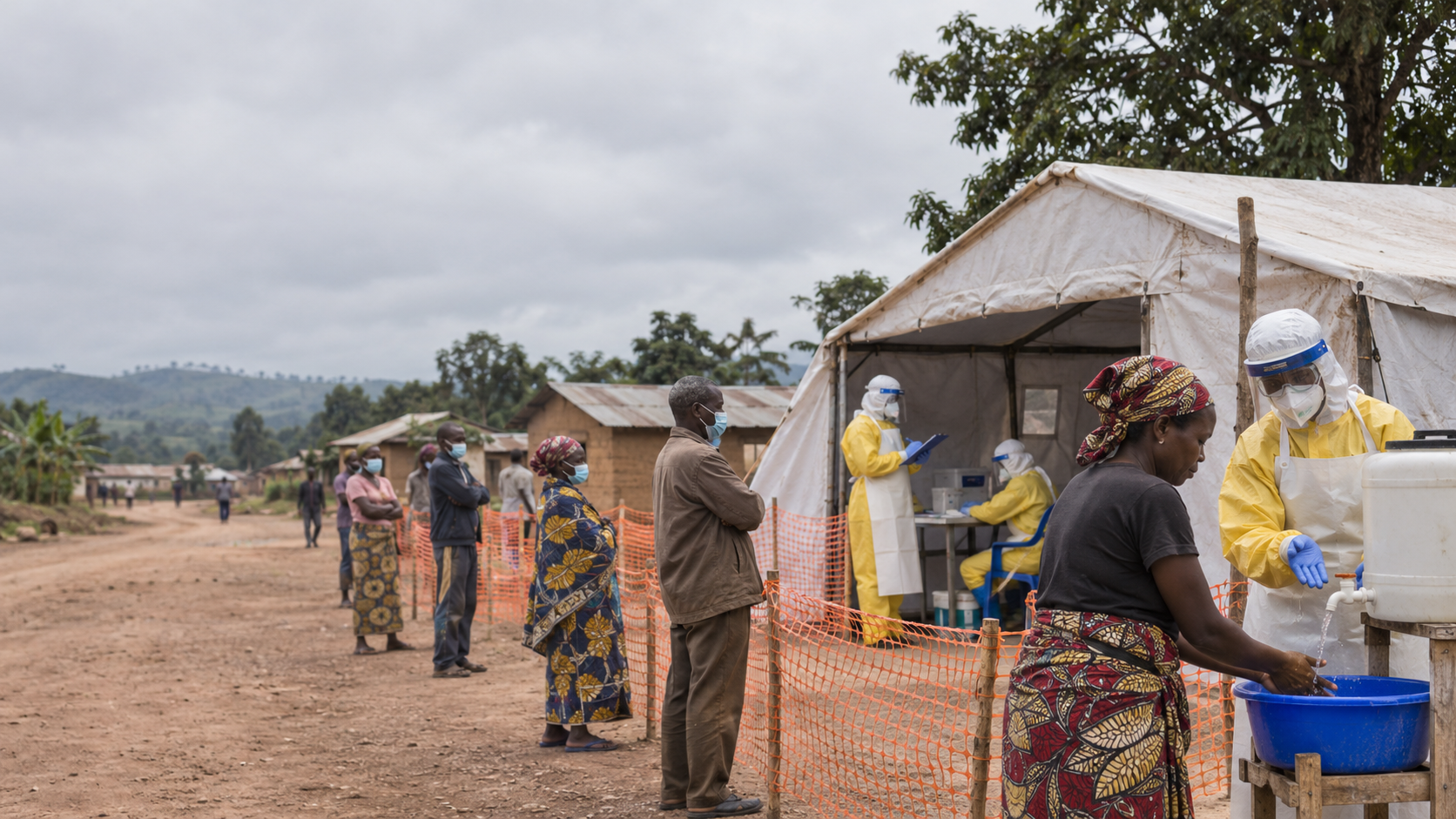
Ebola causes severe illness through viral transmission. Control depends on finding cases quickly, isolating patients safely, tracing contacts, protecting health workers, and communicating clearly with communities.
Islamic State violence causes harm through armed attacks, intimidation, coercion, displacement, threats against institutions, and restrictions on movement. It can make roads unsafe, force families from their homes, and weaken or destroy health services.
For civilians, the choices can become impossible:
- Stay home and risk untreated illness.
- Travel to a treatment facility through an insecure area.
- Avoid health workers because of fear, rumors, or distrust.
- Leave home and lose access to medicine, food, shelter, records, or family support.
- Report a suspected case and risk stigma or separation from relatives.
These choices affect both individual survival and outbreak control. A person who cannot reach care may become seriously ill. People exposed to that person may remain unidentified. A family forced to flee may lose contact with health officials. A clinic that closes may remove the only reliable source of diagnosis in the area.
Why Conflict Complicates Ebola Response
Ebola response requires speed and continuity. Health authorities and humanitarian agencies must identify suspected cases, conduct testing, trace contacts, apply infection-prevention measures, provide treatment and supportive care, and explain the response to the public.
Conflict disrupts every stage. Roads may be open one day and blocked the next. Organizations may suspend operations after an attack or threat. Supplies may be delayed because fuel, vehicles, laboratory materials, or protective equipment cannot reach a clinic.
Disease surveillance also becomes less reliable when people move repeatedly or avoid authorities. The result is not simply a slower response. It is a different outbreak environment, shaped by fear, displacement, and disrupted communication.
The World Health Organization identifies early detection, isolation, treatment, infection prevention, contact tracing, safe burials, and community engagement as central components of Ebola response Source 2.
Each measure becomes harder during conflict. A contact tracer cannot reliably follow a household that has fled. A laboratory cannot process samples if roads are blocked or electricity fails. A burial team cannot operate safely if local authorities cannot guarantee access.
Delays matter. A person who waits several days before seeking care may become more seriously ill. Close contacts may remain unaware of their exposure. Health workers may face greater risks when patients arrive without early warning.
Why People May Avoid Health Facilities
People may avoid hospitals or Ebola treatment centers for rational reasons. Some fear infection inside a facility. Others fear isolation, stigma, or separation from children and relatives. In communities that have experienced abuse, neglect, or coercion, official instructions may not receive automatic trust.
Travel itself may be dangerous. A patient may need to cross checkpoints, contested roads, or areas affected by attacks. A caregiver may lack transport or money. A family may decide that remaining at home is safer than seeking help.
Avoiding care creates two risks. The patient may miss potentially lifesaving treatment and supportive care. Health authorities may also lose the opportunity to identify contacts and interrupt transmission.
Conflict does not merely add another danger to an outbreak. It changes how people interpret medical advice, how responders reach patients, and how quickly the health system can react.
How Islamic State Violence Disrupts Disease Control
Attacks, checkpoints, road closures, threats, and fear can prevent patients from reaching clinics. The same barriers can keep doctors, nurses, laboratory staff, and community health workers away from affected communities.
Ebola operations may require:
- Personal protective equipment.
- Medicines and clinical supplies.
- Laboratory materials.
- Fuel for vehicles and generators.
- Clean water.
- Food for patients and staff.
- Secure communications equipment.
A disrupted supply route can reduce a clinic’s capacity even when the building remains intact. A facility may have staff but no protective equipment, or equipment but no fuel for transport. A laboratory may exist but lack the materials needed to process samples.
The available summary identifies Islamic State violence as part of the crisis but does not establish the specific attacks, locations, or security conditions involved Source 1. Those details require direct verification from the original report or additional authoritative sources.
Fear, Trust, and Public Health Messaging
Public health campaigns depend on trusted messengers. Local health workers, religious leaders, teachers, traditional authorities, and community organizations can explain symptoms and treatment. Violence can force those people to leave or silence them.
Insecurity may damage communication networks, reduce attendance at public meetings, prevent door-to-door education, and make responders appear aligned with a government or military force. It may also increase rumors about treatment centers and vaccines, encouraging people to conceal illness or deaths.
Public cooperation cannot be assumed during armed conflict. Resistance may reflect previous mistreatment, fear of authorities, or a lack of credible information. Treating concern as ignorance can deepen distrust.
Effective communication requires transparency. Communities need clear explanations of what happens at treatment centers, how families can maintain contact with patients, why certain burial procedures are necessary, and how suspected cases are handled.
The Strategic Context
A 2016 analysis cited in the source material warned that the expected territorial defeat of the Islamic State could conceal continuing dangers. It distinguished between the loss of territory and the survival of fighters, networks, ideology, and terrorist capabilities Source 3.
This is historical analysis, not evidence of current conditions. Its broader point remains important: an armed group can lose cities while retaining clandestine networks or shifting toward insurgency and terrorism.
The distinction matters for humanitarian planning. A government may regain nominal control of territory while roads remain unsafe, local institutions remain weak, and attacks continue. Health workers may still face threats, communities may still distrust officials, and aid agencies may remain unable to move freely.
Why Civilians Carry the Greatest Burden
People fleeing violence may lose medical records, medication, identification documents, and contact with relatives. They may not know where the nearest functioning clinic is located.
Displacement also complicates contact tracing. Families may move between communities, informal settlements, and temporary shelters. Health workers may lack accurate information about who lived together, who provided care, or who attended a funeral.
Crowded shelters can create additional public health challenges, including limited water, sanitation, privacy, and access to routine medical services. These conditions should not be treated as evidence of Ebola transmission in any particular camp without verified reporting.
Caregiving can expose family members to infection, particularly when relatives provide hands-on support at home. Children may depend on adults who are ill or missing. Older people and people with disabilities may have difficulty traveling to clinics or understanding changing health instructions.
The central dilemma is stark:
- Seek care and risk exposure to violence or forced separation.
- Remain hidden and risk untreated illness.
- Move to safety and lose continuity of care.
- Cooperate with responders and risk stigma or suspicion.
- Refuse contact and leave potential exposure unidentified.
Humanitarian reporting should describe these choices without inventing names, quotations, or scenes. The available Source 1 summary does not provide verified personal testimony, so individual stories should be added only after the original report is reviewed.
Operational Priorities for Humanitarian Responders
Responders need security assessments, negotiated access, reliable transport, local partnerships, backup communications, and flexible plans. They also need the authority to suspend operations when conditions become unsafe.
Local partnerships are essential. Community-based staff often understand local routes, languages, social networks, and concerns. They can identify trusted messengers and explain why specific measures are necessary.
Practical priorities include:
- Secure movement procedures.
- Adequate personal protective equipment.
- Infection-prevention training.
- Psychological support.
- Rest and staff-rotation systems.
- Clear evacuation plans.
- Reliable communication.
- Access to treatment after occupational exposure.
Government, military, police, and humanitarian actors need communication channels that protect medical neutrality and civilian access to care. Health teams should not be treated as extensions of military operations. Visible association with security forces can reduce cooperation and increase danger.
What the International Response Must Address
Security and public health planning cannot operate in separate compartments. Joint risk assessments should examine:
- Disease transmission.
- Population movement.
- Clinic and laboratory access.
- Supply routes.
- Threats to health workers.
- Communication failures.
- Evacuation and continuity plans.
International support should strengthen local clinics, community health workers, laboratories, emergency transport, surveillance systems, communications, electricity, and water infrastructure. Local capacity remains valuable after an Ebola response ends because it can detect new outbreaks, treat routine illnesses, support displaced people, and rebuild trust.
Trust must be developed before a crisis begins. Local leaders, religious figures, teachers, health workers, and civil society organizations can help explain treatment, isolation, vaccination, burial practices, and infection prevention. Communities also need ways to report concerns and challenge misinformation.
Conclusion
The phrase “Ebola and Islamic State” describes a compound emergency, not two isolated events.
Ebola response depends on access, trust, speed, and functioning health services. Islamic State violence can destroy those conditions by restricting movement, displacing communities, threatening workers, and weakening institutions.
The loss of territorial control does not automatically eliminate an armed group’s threat. The historical analysis cited in Source 3 warned that fighters, networks, ideology, insurgency, and terrorism could survive beyond territorial defeat Source 3.
The greatest risks fall on civilians without safe routes, reliable information, or functioning medical services. Verified reporting must distinguish documented facts from broader analysis and unconfirmed claims.
Civilians trapped between an Ebola outbreak and Islamic State violence cannot be protected through military action or medical intervention alone. Effective response requires safe humanitarian access, trusted local health systems, protection for medical workers, accurate public information, reliable supplies, and long-term attention to post-conflict insecurity.
When disease and violence overlap, restoring safety and restoring health care become the same humanitarian task.
Frequently Asked Questions
What does “caught between killers” mean?
It describes civilians facing an Ebola outbreak while also living under threat from Islamic State violence. The phrase contrasts a public health emergency with an armed conflict that can restrict movement, damage health services, and prevent people from receiving care.
How can conflict make an Ebola outbreak worse?
Conflict can delay diagnosis, stop patients from reaching treatment centers, prevent contact tracing, disrupt supplies, and force health workers to leave affected areas. Fear and misinformation may also reduce cooperation with responders.
Does the defeat of Islamic State territory end the group’s threat?
No. Source 3 warns that the loss of territorial control may conceal the survival of fighters, networks, ideology, insurgency, or terrorist capabilities. Territorial defeat should not be treated as the end of the security problem.
Why might people avoid Ebola treatment centers?
People may fear infection, isolation, forced separation from relatives, stigma, or violence during travel. Distrust of authorities and misinformation can also discourage people from reporting symptoms or contacts.
What do humanitarian responders need in conflict-affected outbreak zones?
They need safe access, protective equipment, reliable transport, secure communications, trained local staff, medical supplies, and coordination that protects humanitarian neutrality. Community trust is equally important.
Which sources support this article?
Source 1 provides the core headline-level summary about people facing Ebola and Islamic State violence Source 1. Source 3 supports the broader discussion of Islamic State’s possible transition from territorial control to insurgency or terrorism Source 3. The World Health Organization provides general guidance on Ebola response measures Source 2. The remaining listed sources are unrelated, incomplete, or lack verifiable content and do not support factual claims in this article.